
kg25_sh3_2

Part A Self-Introduction
A_1
My name is ________. What is your name?
A_2
My name is ________. Nice to meet you.
A_3
Nice to meet you too, ________. How are you today?
A_4
Answer:
A_5
I see. Let’s start our lesson.
Part B Warm-up
B_1
Let’s have a brief talk about today’s topic.

B_2
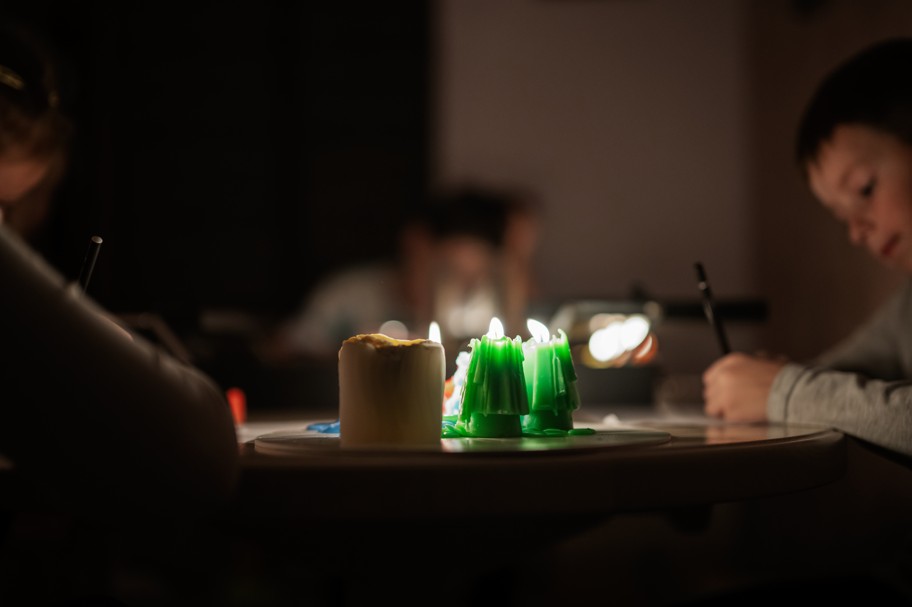
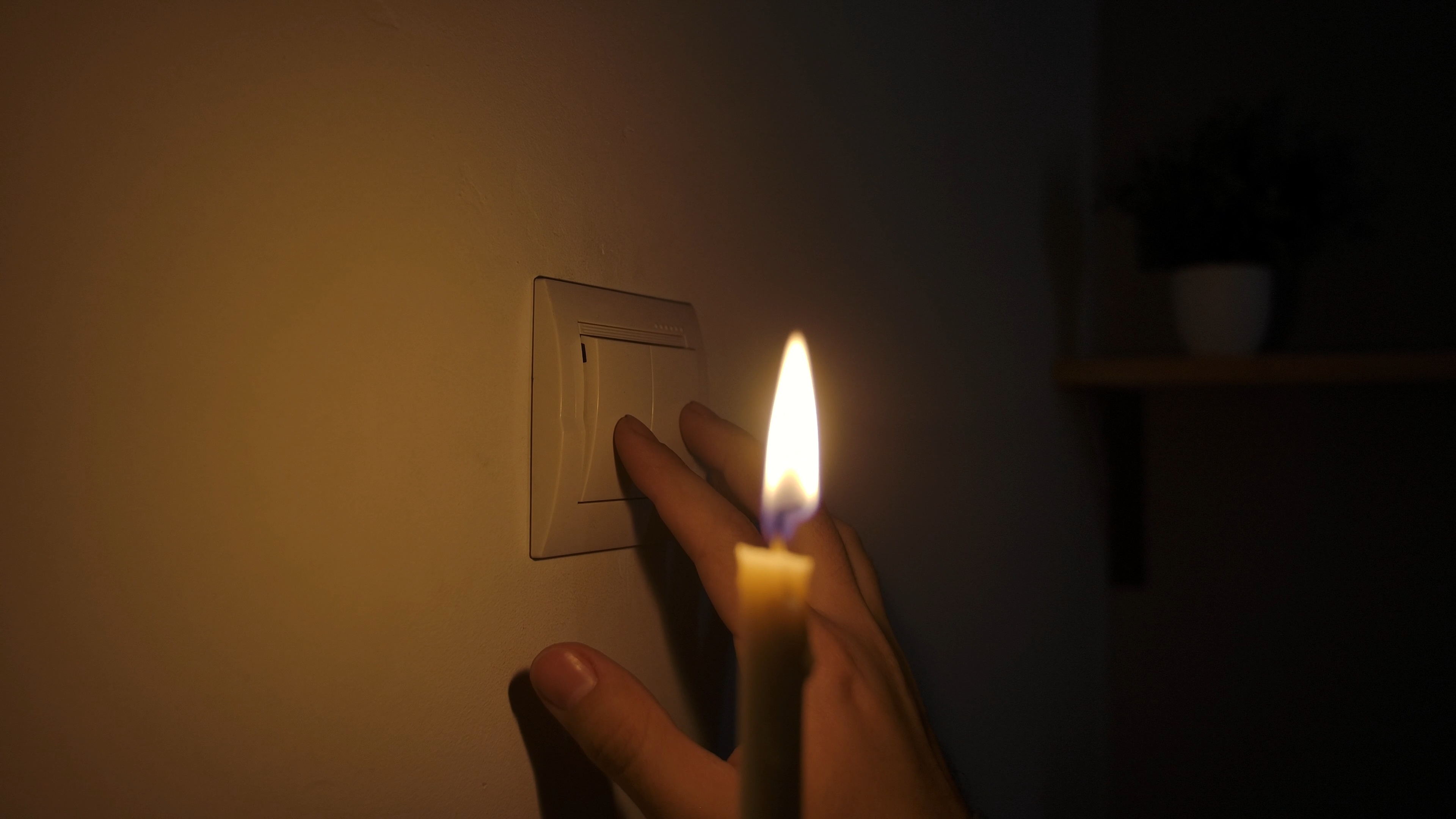
1. Have you ever experienced a power outage? If so, what was it like?
(power outage 停電)
Answer:


2. What would be the biggest challenge for you without electricity?
Answer:
B_3
Thank you for telling me about your thoughts!
Part C Vocabulary Preview 1
C_1
Let’s read the words and sample sentences aloud.
Please repeat after me.
C_2
charge
1. charge 〜に充電する
It takes about one hour to fully charge this smartphone.
efficient
2. efficient 効率的な
Rechargeable batteries are necessary for the efficient use of renewable energy.
consist of
3. consist of 〜で構成される
A typical battery consists of two ends and chemicals.
innovation
4. innovation 革新、イノベーション
Many innovations in batteries have a great impact on new technologies.
C_3
Let’s do some vocabulary quizzes. Read each sentence and guess the missing word(s) from the context.
C_4
charge / efficient / consist of / innovation
innovation
1. The introduction of a new idea, method, or useful device
Answer: ____________________________________________
efficient
2. Working well and quickly, without wasting time, energy, or money
Answer: ____________________________________________
consist of
3. To be formed or made from two or more different parts
Answer: ____________________________________________
charge
4. To put electrical energy into a battery so it can work
Answer: ____________________________________________
C_5
That’s wonderful! Let’s move on to the next activity.
Part D Reading 1
D_1
Let’s start by reading through today’s passage.

D_2

The Power in Your Hand

How to charge your device:

STEP 1: Connect the charger’s USB plug to the port of an AC adapter.

STEP 2: Place your device on the charger, making sure it touches the pins.

STEP 3: Confirm the charging icon appears and wait until the battery is 100% full.

Following the manual to charge a device is simple, but the technology inside is the result of long development. Modern batteries are crucial for the efficient use of renewable energy, such as solar and wind power, by storing electricity until it’s needed. The basic science is fascinating; a battery consists of two ends and chemicals that react to produce power.

The history of batteries is a story of constant innovation. From early 19th-century models to today’s lithium-ion batteries, scientists like Akira Yoshino have made them smaller, safer, and more powerful, helping create a sustainable society.

D_3
Express your opinions on today’s topic.
Give at least one reason or example to support your opinion. You have one minute to prepare.

D_4
📃 Based on the Passage
According to the passage, what does a typical battery consist of?
Answer:
🗣️ Your Opinion 1
When you get a new gadget, like a smartphone, are you curious about how it works inside?

If yes, what part are you most interested in (e.g., the battery, the camera, or the software)?
If not, what is the most important thing for you when you choose a new gadget?
Answer:
🗣️ Your Opinion 2
What kind of innovation would you like to see for smartphone batteries in the future?

A) A battery that can charge in one minute
B) A battery that lasts for a whole week
C) An environmentally friendly battery

Please explain the reason for your choice.
Answer:
D_5
Thank you! That’s a great point.

Part E Vocabulary Preview 2
E_1
Let’s read the words and sample sentences aloud.
Please repeat after me.
E_2
have an impact on
1. have an impact on ~  ~に影響を与える
The invention of the smartphone has a huge impact on our lives.
lessen
2. lessen  ~を減らす、少なくする
Using a reusable bag can help lessen plastic waste.
exist
3. exist  存在する
Many convenient technologies could not exist without electricity.
means
4. means  方法、手段
For many people, technology is a means of communication.
E_3
That’s wonderful! Let’s move on to the next activity.
Part F Reading 2
F_1
Let’s read the second passage.

F_2

More Than Just Power

Many technologies we use daily could not exist without batteries. These innovations have an impact on everything from communication to transportation. Beyond convenience, batteries are also a vital means for creating a greener planet. They make renewable energy more reliable by storing power. Furthermore, rechargeable batteries significantly lessen the huge environmental problem of waste from billions of single-use types. By reducing what goes into landfills, they are a key tool for building a sustainable society.

F_3
Express your opinions on today’s topic.
Give at least one reason or example to support your opinion. You have one minute to prepare.

F_4
📃 Based on the Passage
Beyond convenience, what vital means are batteries for creating a greener planet?
Answer:
🗣️ Your Opinion 1
In your daily life, which battery-powered device is the most essential? Choose one and briefly explain why. (A. Smartphone / B. Laptop or tablet / C. Wireless earphones / D. Portable charger)
Answer:
🗣️ Your opinion 2
How can we use fewer single-use batteries? Please give an example.
(e.g., use rechargeable batteries, buy items you can charge with a cable, etc.)
Answer:
F_5
Thank you! That’s a great point.

Part G Vocabulary Preview 3
G_1
Let’s read the words and sample sentences aloud.
Please repeat after me.
G_2
adopt
1. adopt  ~を採用する
Our school decided to adopt a new digital textbook for our class.
stable
2. stable  安定した
It is important to have a stable internet connection for online classes.
possibility
3. possibility  可能性
There is a possibility that AI will change our lives even more.
clear the way for
4. clear the way for ~  ~への道を開く
The invention of the internet cleared the way for new types of communication.
G_3
That’s wonderful! Let’s move on to the next activity.
Part H Reading 3
H_1
Let’s read the second passage.

H_2

The Path to a Better Battery

The lithium-ion battery (LIB) is a key technology today, thanks to the work of three Nobel Prize-winning scientists. Early versions were not very safe or stable, sometimes catching fire. A major step forward came when scientist Akira Yoshino decided to adopt an earlier idea but used a new material. This innovation cleared the way for the safe, practical LIBs we use in our phones and cars. The evolution of this technology is not over; there is still the possibility of many new discoveries.

H_3
Express your opinions on today’s topic.
Give at least one reason or example to support your opinion. You have one minute to prepare.

H_4
📃 Based on the Passage 1
What problem did the early version of the lithium-based battery have?
Answer:
📃 Based on the Passage 2
How did Akira Yoshino’s work clear the way for a practical LIB?
Answer:
🗣️ Your Opinion
Beside the lithium-ion battery, what is one other technology you think has the possibility to change our future for the better?
(e.g., Artificial Intelligence (AI), advanced medical technology, new types of clean energy, etc.)
Answer:

student

tutor
H_5
Great job! You showed clear understanding of the passage and gave thoughtful opinion.

Part I The “Weekday vs. Holiday” Blackout Challenge⚡
I_1
Compare and explain how the importance of your essential device changes between a school day and a weekend at home.
blackout 停電

I_2
STEP 1: Choose Your Essential Item ☝️
First, please choose only ONE battery-powered item you cannot live without.
❓️What is your most essential item?
– 📱 Smartphone
– 💻 Computer
– 📱💻 Tablet
– 🎮 Portable Game Console
Others
Answer:

student
I_3
Good choice! That item is really important in daily life.

I_4
STEP 2: Weekday Blackout ⚡️🏫⬛️
💭 Imagine: You cannot use the essential item you chose on a school day.
❓What is the biggest problem for your studies or for communicating with friends?
Answer:
❓️Without your item, how would you spend time with your friends in school?
Answer:

student
I_5
Good answer! That’s a clear idea.

I_6
STEP 3: Weekend Blackout ⚡️🏡⬛️
💭 Imagine: You cannot use the essential item you chose on a weekend at home.
❓ What is the biggest problem for your family and your free time?
Answer:
❓ If you couldn’t use anything that runs on batteries, what new offline hobby could you try?
Answer:

student

tutor
I_7
Good job! You explained your thoughts clearly and confidently.

Part J Free Talk

J_1

Let’s take turns asking these questions about electricity and blackouts.
J_2
1. Do you try to save electricity at home? For example, do you turn off the lights when you leave a room?
Answer:
2. Imagine there is no electricity for one whole day. What is one fun thing you could do with your family or friends?
Answer:
3. In the future, what new technology using electricity would you like to try?
Answer: