All posts by weblio

Conversation(Beginner Chapter 2)|日常会話(初級2章)
Lesson7: At the Park-Present Progressive Tense 公園で-現在進行形

LESSON GOAL

Let’s look at our lesson goal.
In this material, you will learn how to make sentences in the present progressive tense.

PART A_1

Let’s read the sentences aloud. Please repeat after me.

PART A_2

1. I am flying a kite. 私はたこを飛ばしています。 2. She is riding a bicycle. 彼女は自転車に乗っています。 3. He is walking with his dog. 彼は犬と散歩しています。 4. We are jogging around the park. 私たちは公園の周りをジョギングしています。 5. They are playing badminton. 彼らはバドミントンをしています。 6. Are they having a picnic? 彼らはピクニックをしていますか?
PART B_1

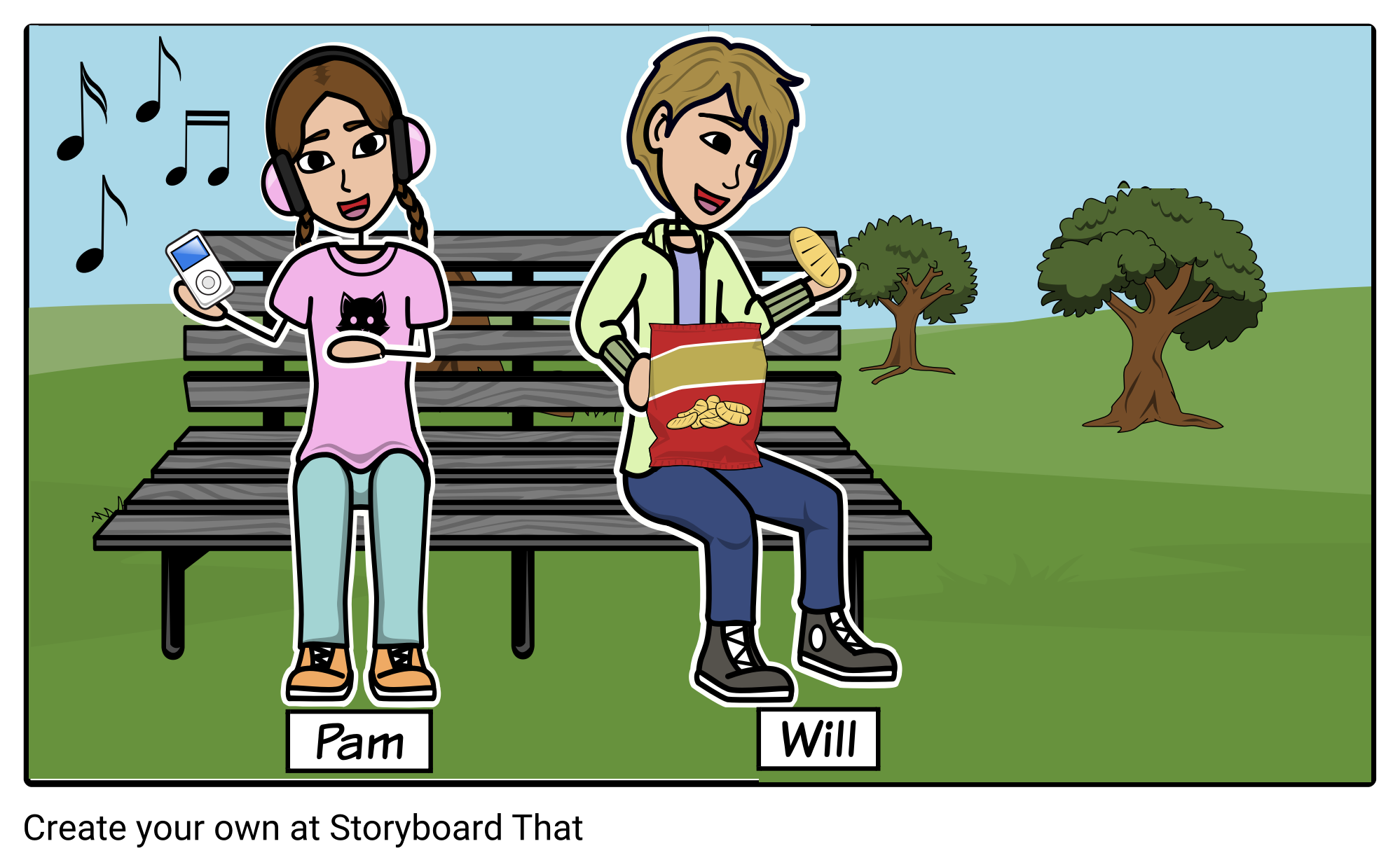
Study the picture for 1 minute. Then describe what each character is doing by completing the sentences with the correct verbs.

PART B_2

1. What is Pam doing?
Answer: Pam is _____________ to music.
2. What is Will doing?
Answer: Will is _____________ potato chips.

PART C_1

Let’s read the dialogue. I will play Ron, and you will play Emma. Then, we’ll switch roles.

PART C_2

It’s nice to see you in the park today, Emma. What are you doing here?
Hi, Ron. It’s nice to see you, too. I am just walking around the park. How about you?

I see. I am just waiting for my friend, Sam. Anyway, where is your dog?
The vet is treating my dog in the clinic. He is sick today.

I am sad to hear that. I hope your dog gets better soon.
Thank you, Ron. The vet said that my dog is getting stronger now. I hope he continues to get better.

PART C_3

Please answer the questions in complete sentences.

PART C_4

1. What is Emma doing in the park?
Answer:
2. Who is Ron waiting for?
Answer:
3. What is the vet doing to Emma’s dog?
Answer:

PART D_1

Let’s talk. Please answer my questions. You may also ask me questions during the conversation.

PART D_2

1. Imagine you are in the park. What are you doing now?
Answer:
2. Imagine there are a lot of people in the park. What are they doing now?
Answer:
3. Imagine you’re having a picnic in the park. What are you eating now?
Answer:
4. Imagine you are in the park. What are you looking at?
Answer:
5. Imagine you are walking in the park. What are you doing now?
Answer:

REVIEW AND FEEDBACK

Now, let us review what you learned in this lesson.
(Please give short feedback on how your student did in your class.)
Grammar
文法
Pronunciation
発音
Vocabulary
単語
Comprehension
理解
GOOD 文法の誤りはほとんどなく、完全な文章で話すことができる ほとんどの単語をはっきりと正しく発音することができる 習った表現を適切に使うことができる 文章を理解し、質問に正しく答えることができる

FAIR
文法の誤りはあるが、完全な文章で話すことができる 発音の練習が必要な言葉がいくつかある たまにミスはあるが、習った表現を適切に使うことができる 文章を完全に理解するのは難しく、質問に正しく答えられないときもある

POOR
文章で話すのは難しく、単語だけで話すことができる 発音の練習が必要である 習った単語と表現を少しだけ使うことができる 文章を理解するのは難しく、質問に答えるのは難しい
TUTOR FEEDBACK

GRAMMAR
Good: Was able to speak in complete sentences with minimal grammatical errors.
Fair: Was able to speak in complete sentences with evident grammatical errors.
Poor: Was able to speak using words only.
PRONUNCIATION
Good: Was able to pronounce most of the words clearly and correctly.
Fair: Mispronounced a few words.
Poor: Mispronounced most of the words.
VOCABULARY
Good: Used appropriate expressions learned in class.
Fair: Used appropriate expressions learned in class and made a few errors in word choice.
Poor: Used only a few words and expressions.
COMPREHENSION
Good: Was able to understand the passages and answer the questions correctly.
Fair: Had a little difficulty in understanding passages and answering questions.
Poor: Had a hard time understanding passages and answering questions.

Conversation(Beginner Chapter 2)|日常会話(初級2章)
Lesson6: In the Countryside-Simple Future Tense 田舎で-未来形

LESSON GOAL

Let’s look at our lesson goal.
In this material, you will learn to talk about future plans.

PART A_1

Let’s read the sentences aloud. Please repeat after me.

PART A_2

1. I will go to the hills. 私は丘に行きます。 2. She will plant some trees. 彼女は何本か木を植えます。 3. He will climb a mountain. 彼は山に登ります。 4. Will she go fishing? 彼女は釣りに行きますか? 5. We will swim in the lake. 私たちは湖で泳ぎます。 6. They will go hiking. 彼らはハイキングに行きます。

PART B_1

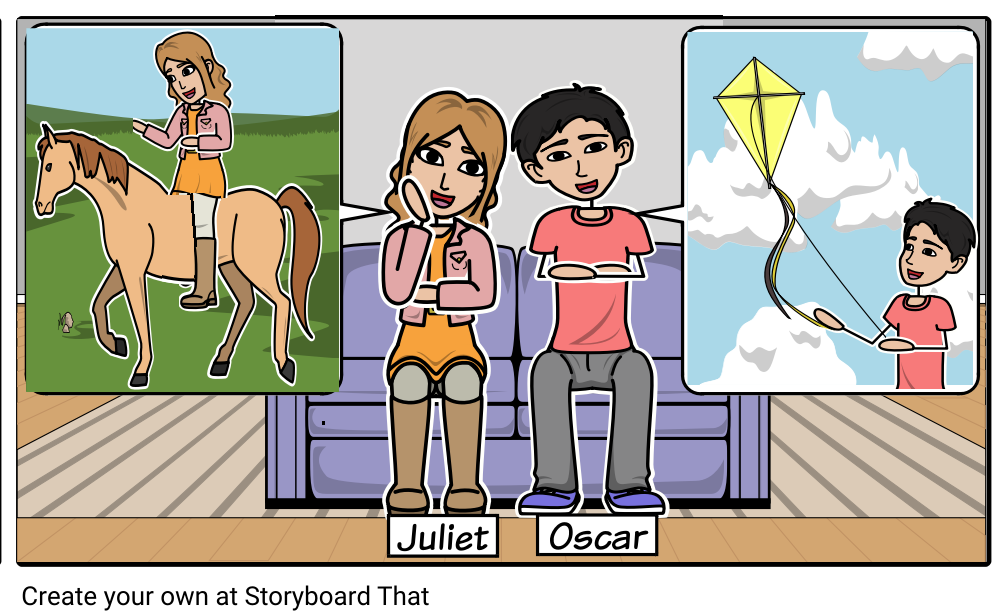
Study the picture for 1 minute. Describe what each character will do by completing the sentences.

PART B_2

1. What will Oscar do?
Answer: Oscar ______ fly a kite.
2. What will Juliet do?
Answer: Juliet ______ ride a horse.

PART C_1

Let’s read the dialogue. I will play Ron and you will play Emma. Then, we’ll switch roles.

PART C_2

We will have our summer vacation very soon. Do you have any plans?
Yes, Ron. My family and I will go to the farm. I am excited because we will bring our dogs. How about you?

I will go to the countryside with my family. My whole family will be there, so I think it will be fun.
That’s nice. How long will you stay in the countryside?

I will be on vacation for a month, so I will stay there for 3 weeks. We will go home after one more week.
I am sure you will enjoy your stay there. Have a nice trip!

PART C_3

Please answer the questions in complete sentences.

質問に対して文章で答えてみましょう。

PART C_4

1. Where will Emma and her family go?
Answer:
2. Where will Ron go with his family?
Answer:
3. How long will Ron be on vacation?
Answer:

PART D_1

Let’s talk. Please answer my questions. You may also ask me questions during the conversation.

PART D_2

1. Will you go to the countryside on your next vacation?
Answer:
2. Which season will you visit the countryside?
Answer:
3. How will you go to the countryside?
Answer:
4. What activities will you try when you go to the countryside?
Answer:
5. Which will you choose: the mountains or the beach?
Answer:

REVIEW AND FEEDBACK

Now, let us review what you learned in this lesson.
(Please give short feedback on how your student did in your class.)
Grammar
文法
Pronunciation
発音
Vocabulary
単語
Comprehension
理解
GOOD 文法の誤りはほとんどなく、完全な文章で話すことができる ほとんどの単語をはっきりと正しく発音することができる 習った表現を適切に使うことができる 文章を理解し、質問に正しく答えることができる

FAIR
文法の誤りはあるが、完全な文章で話すことができる 発音の練習が必要な言葉がいくつかある たまにミスはあるが、習った表現を適切に使うことができる 文章を完全に理解するのは難しく、質問に正しく答えられないときもある

POOR
文章で話すのは難しく、単語だけで話すことができる 発音の練習が必要である 習った単語と表現を少しだけ使うことができる 文章を理解するのは難しく、質問に答えるのは難しい
TUTOR FEEDBACK

GRAMMAR
Good: Was able to speak in complete sentences with minimal grammatical errors.
Fair: Was able to speak in complete sentences with evident grammatical errors.
Poor: Was able to speak using words only.
PRONUNCIATION
Good: Was able to pronounce most of the words clearly and correctly.
Fair: Mispronounced a few words.
Poor: Mispronounced most of the words.
VOCABULARY
Good: Used appropriate expressions learned in class.
Fair: Used appropriate expressions learned in class and made a few errors in word choice.
Poor: Used only a few words and expressions.
COMPREHENSION
Good: Was able to understand the passages and answer the questions correctly.
Fair: Had a little difficulty in understanding passages and answering questions.
Poor: Had a hard time understanding passages and answering questions.

Grammar|英文法
Lesson28 : Past Tense 2 過去形2

LESSON GOAL

Let’s check our lesson goal. In this material, you will learn how to use the regular and irregular past tense forms of verbs.

GRAMMAR POINT

PART A_1

Please read aloud the following passage. I will check your pronunciation as you read.

PART A_2

past tense_Image3

This morning, Alex went to a mountain and skied with his friends. He joined a local ski group, and they went to the top of the mountain. His friends invited him to have lunch, and they ate curry and rice.

In the afternoon, Alex jumped too high and hurt his ankle. He needed to see a doctor. His friend carried him to the clinic. The doctor advised him to take some medicine and have enough rest.

PART A_3

Please answer the following questions based on the passage.

PART A_4

1. Question What did they eat for lunch?
Answer: _______________________________________________
2. Question What happened to Alex in the afternoon?
Answer: _______________________________________________
3. Question Who carried him to the clinic?
Answer: _______________________________________________
PART B_1

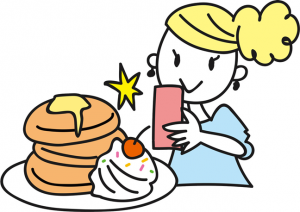
Describe the picture using the following expressions.


“…regular verb+ed…”

“…irregular verb (e.g., went, ate)…”

PART B_2

Past tense_2

“…regular verb+ed…”

“…irregular verb (e.g., went, ate)…”

PART B_3

Please answer the following questions based on the picture.

PART B_4

1. Question What did they do?
Answer: _______________________________________________
2. Question What did the boy eat?
Answer: _______________________________________________
PART C_1

Please answer the following questions based on your experience.

PART C_2

1. Question What did you do last spring vacation?
Answer: _______________________________________________
2. Question Did you go to bed early last night?
Answer: _______________________________________________
3. Question Where did you go last weekend?
Answer: _______________________________________________
4. Question What did you have for breakfast?
Answer: _______________________________________________
5. Question Did you ride a bus to school?
Answer: _______________________________________________

REVIEW AND FEEDBACK

Now, let us review the things that you learned in this lesson.
(Please give a short feedback on how your student did in your class.)
Grammar
文法
Pronunciation 発音 Vocabulary
単語
Comprehension
理解
GOOD 文法の誤りはほとんどなく、完全な文章で話すことができる ほとんどの単語をはっきりと正しく発音することができる 習った表現を適切に使うことができる 文章を理解し、質問に正しく答えることができる

FAIR
文法の誤りはあるが、完全な文章で話すことができる 発音の練習が必要な言葉がいくつかある たまにミスはあるが、習った表現を適切に使うことができる 文章を完全に理解するのは難しく、質問に正しく答えられないときもある

POOR
文章で話すのは難しく、単語だけで話すことができる 発音の練習が必要である 習った単語と表現を少しだけ使うことができる 文章を理解するのは難しく、質問に答えるのは難しい
TUTOR FEEDBACK

GRAMMAR
Good: Was able to speak in complete sentences with minimal grammatical errors.
Fair: Was able to speak in complete sentences with evident grammatical errors.
Poor: Was able to speak using words only.
PRONUNCIATION
Good: Was able to pronounce most of the words clearly and correctly.
Fair: Mispronounced a few words.
Poor: Mispronounced most of the words.
VOCABULARY
Good: Used appropriate expressions learned in class.
Fair: Used appropriate expressions learned in class and made a few errors in word choice.
Poor: Used only a few words and expressions.
COMPREHENSION
Good: Was able to understand the passages and answer the questions correctly.
Fair: Had a little difficulty in understanding passages and answering questions.
Poor: Had a hard time understanding passages and answering questions.

Conversation(Beginner Chapter 2)|日常会話(初級2章)
Lesson5: Occasions-Simple Past Tense 行事-過去形

LESSON GOAL

Let’s look at our lesson goal.
In this material, you will learn how to learn how to use the simple past tense.

PART A_1

Let’s read the sentences aloud. Repeat after me.

PART A_2

1. I went to a birthday party. 私は誕生日会に行きました。 2. He gave a present to his friend. 彼は友達に誕生日プレゼントをあげました。 3. She cooked pasta for Mother’s Day. 彼女は母の日にパスタを作りました。 4. Did you go to the New Year’s Day party? あなたは新年会に行きましたか? 5. We ate cake at the wedding. 私たちは結婚式でケーキを食べました。 6. They prepared for the Culture Festival. 彼らは文化祭の準備をしました。

PART B_1

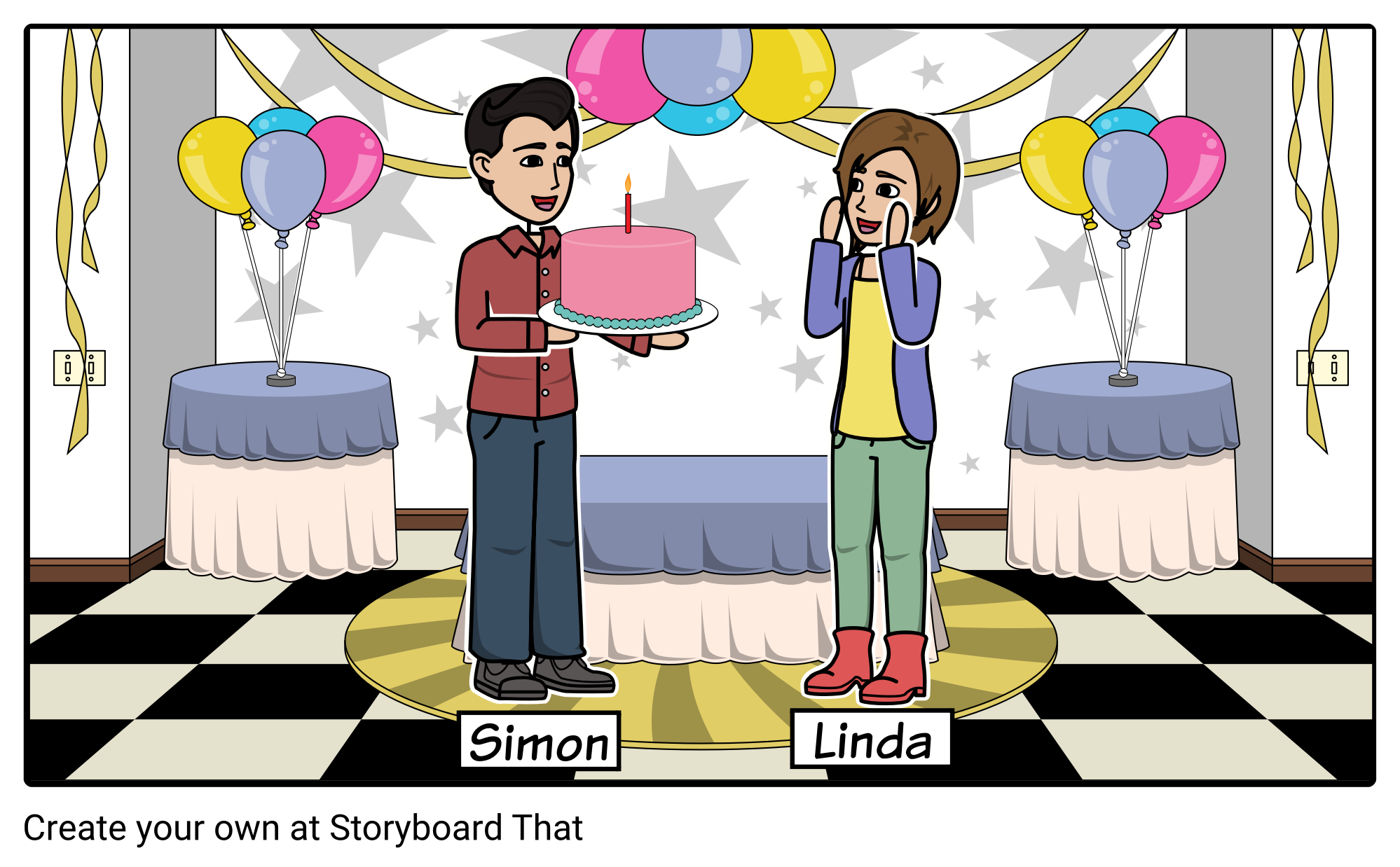
Study the picture for 1 minute. Describe each character by completing the sentences with the correct verbs.

PART B_2

1. What did Linda feel?
Answer:
2. What did Simon do?
Answer:

PART C_1

Let’s read the dialogue. I will play Sam, and you will play Alice. Then, we’ll switch roles.

PART C_2

How was your friend’s birthday party?
It was fun. We ate delicious food. My friend’s mother baked a cake for his birthday.

That was nice. I think the party was really exciting.
Yes, it was. We also played games and got some prizes.

I guess your friend enjoyed his birthday celebration.
He sure did. He was very happy that all of our friends went to his party.

PART D_1

Please answer the questions in complete sentences.

PART D_2

1. How was the birthday party of Alice’s friend?
Answer:
2. What did the mother of Alice’s friend bake?
Answer:
3. What activities did Alice and her friends do at the party?
Answer:

PART E_1

Let’s talk. Please answer my questions. You may also ask me questions during the conversation.

PART E_2

1. How did you celebrate your birthday last year?
Answer:
2. What activities did you do on your favorite Japanese holiday?
Answer:
3. What activities did you do on your favorite foreign/western holiday?
Answer:
4. How did you prepare for New Year’s Eve?
Answer:
5. How did you celebrate Christmas?
Answer:

REVIEW AND FEEDBACK

Now, let us review what you learned in this lesson.
(Please give short feedback on how your student did in your class.)
Grammar
文法
Pronunciation
発音
Vocabulary
単語
Comprehension
理解
GOOD 文法の誤りはほとんどなく、完全な文章で話すことができる ほとんどの単語をはっきりと正しく発音することができる 習った表現を適切に使うことができる 文章を理解し、質問に正しく答えることができる

FAIR
文法の誤りはあるが、完全な文章で話すことができる 発音の練習が必要な言葉がいくつかある たまにミスはあるが、習った表現を適切に使うことができる 文章を完全に理解するのは難しく、質問に正しく答えられないときもある

POOR
文章で話すのは難しく、単語だけで話すことができる 発音の練習が必要である 習った単語と表現を少しだけ使うことができる 文章を理解するのは難しく、質問に答えるのは難しい
TUTOR FEEDBACK

GRAMMAR
Good: Was able to speak in complete sentences with minimal grammatical errors.
Fair: Was able to speak in complete sentences with evident grammatical errors.
Poor: Was able to speak using words only.
PRONUNCIATION
Good: Was able to pronounce most of the words clearly and correctly.
Fair: Mispronounced a few words.
Poor: Mispronounced most of the words.
VOCABULARY
Good: Used appropriate expressions learned in class.
Fair: Used appropriate expressions learned in class and made a few errors in word choice.
Poor: Used only a few words and expressions.
COMPREHENSION
Good: Was able to understand the passages and answer the questions correctly.
Fair: Had a little difficulty in understanding passages and answering questions.
Poor: Had a hard time understanding passages and answering questions.

TOEFL_task6(1)

DIALOGUE READING1

I will read aloud a passage in below. Please listen and take notes.

講師が文章を音読しますので、よく聞いてメモを取りましょう。

READ

new year

READING

Now, please read the passaeg aloud in above.

上の文章を音読してください。

COMPREHENSION CHECK

Please answer the questions about the dialogue.

講師が会話文について質問するので答えましょう。

ANSWER

1. What is the professor talking about?

____________________________________________________.

2. What is a first example?

____________________________________________________.

3. What is a second example?

____________________________________________________.

CHECK YOUR ANSWERS1

Now we’ll check sample answer. Please repeat after me.

解答例を見ます。講師に続いて読みましょう。

SAMPLE ANSWER

1. What is the professor talking about?

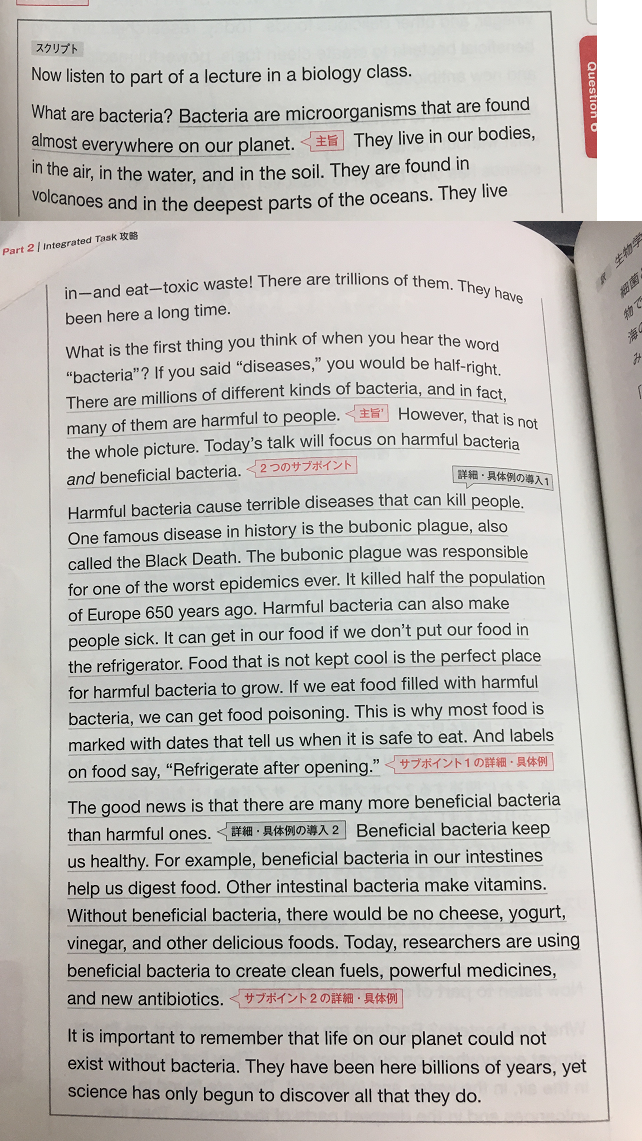
The professor is talking about bacteria and the effects bacteris can have on humans.

2. What is a first example?

The professor provides the example of the Black Death to illustrate that harmful bacteria can kill prople.

3. What is a second example?

The professor provides the example of the helpful bacteria in our intestines to show that some beneficial bacteria can help us to digest food.

TOEFL_task5(2)

DIALOGUE READING1

Please read a passage with yout tutor.

講師と以下の文章を音読しましょう。

READ

new year

READING SILENTLY1

Now, please read the dialogue silently for 50 seconds.

50秒で会話文を黙読しましょう。

COMPREHENSION CHECK1

Please answer the questions about the dialogue.

講師が会話文について質問するので答えましょう。

ANSWER

1. What are a female student and a male studednt talking about?

A female student and a male studednt talking about _______________________.

2. What is a problem?

The problem is that ______________________________.

3. What is the first solution the man offer?

The first solution is ______________________________.

4. What is the second solution

The second solution is ______________________________.

6. Which solution do you agree with?

I agree with ______________________________.

7. Why do you agree with the solution?

Because ______________________________.

CHECK YOUR ANSWERS1

Now we’ll check sample answer. Please repeat after me.

解答例を見ます。講師に続いて読みましょう。

SAMPLE ANSWER

1. What are a female student and a male studednt talking about?

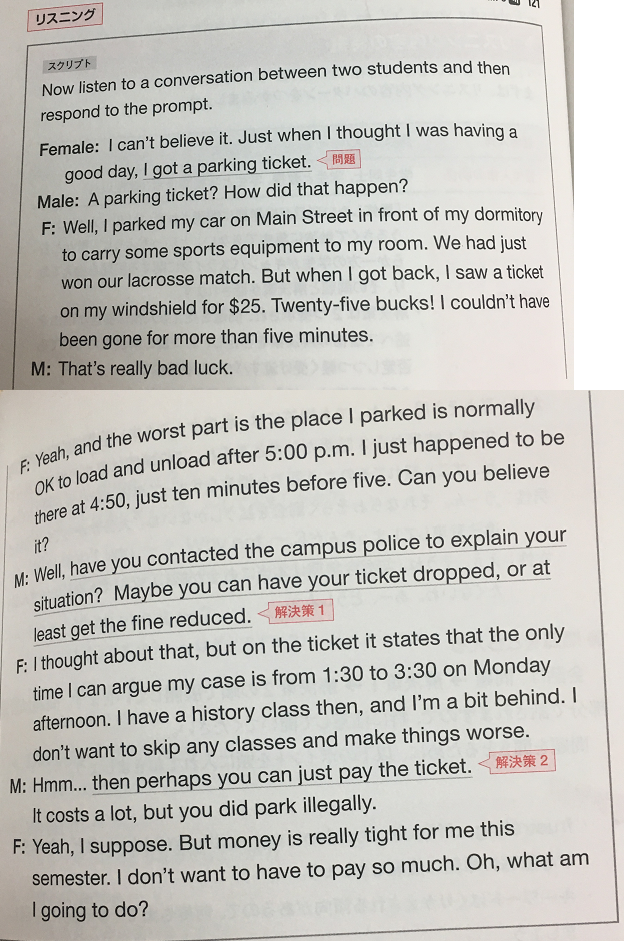
A female and a male student are talking about a problem the female student is facing.

2. What is a problem?

The problem is that she got an expensive parking ticket in front of her dormitory when she carried in some sports equipment.

3. What is the first solution the man offer?

The first solution is to contact the campus police and explain her situation to get her ticket dropped or reduced.

4. What is the second solution

The second solution is to accept the ticket and pay the fine.

6. Which solution do you agree with?

I agree with the second solution.

7. Why do you agree with the solution?

Because the woman is already behind in her history class. if she skips to go see the campus police, she may fall too far behind in her class. The ticket might be expensive, but I think she should just pay it anyway. Skipping class is just not worth the risk of falling further behind in her class.

Grammar|英文法
Lesson35: (Will & Going to) 未来形

LESSON GOAL

Let’s check our lesson goal. In this material, you will learn how to use “will” and “going to”.

GRAMMAR POINT

PART A_1
Please read aloud the following passage. I will check your pronunciation as you read.
PART A_2

Will&GoingTo_1

Misa likes going to the park. There is a park where her family always visits. On Saturday, she will go there to play. She will fly a kite with her father. Her mother is going to prepare her favorite dishes for their picnic. Misa is very excited for their trip.

PART A_3
Please answer the following questions based on the passage.
PART A_4

1. Question Where will Misa go on Saturday?
Answer: _______________________________________________
2. Question What is her mother going to prepare for their picnic?
Answer: _______________________________________________
3. Question What will Misa and her father do?
Answer: _______________________________________________
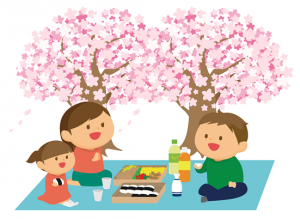
PART B_1
Describe the picture using the following expressions:
“…will…”, “…going to…”
PART B_2

Will & Going to_2

“…will…”

“…going to…”

PART B_3
Please answer the following questions based on the picture.
PART B_4

1. Question Where will the family go?
Answer: _______________________________________________
2. Question What are they going to do?
Answer: _______________________________________________
PART C_1
Please answer the following questions based on your experience.
PART C_2

1. Question Where will you go after this lesson?
Answer: _______________________________________________
2. Question What will you eat for dinner?
Answer: _______________________________________________
3. Question What are you going to do tomorrow?
Answer: _______________________________________________
4. Question How are you going to spend your weekend?
Answer: _______________________________________________
5. Question Where will you spend your summer vacation?
Answer: _______________________________________________

REVIEW AND FEEDBACK

Now, let us review the things that you learned in this lesson.
(Please give a short feedback on how your student did in your class.)
Grammar
文法
Pronunciation 発音 Vocabulary
単語
Comprehension
理解
GOOD 文法の誤りはほとんどなく、完全な文章で話すことができる ほとんどの単語をはっきりと正しく発音することができる 習った表現を適切に使うことができる 文章を理解し、質問に正しく答えることができる

FAIR
文法の誤りはあるが、完全な文章で話すことができる 発音の練習が必要な言葉がいくつかある たまにミスはあるが、習った表現を適切に使うことができる 文章を完全に理解するのは難しく、質問に正しく答えられないときもある

POOR
文章で話すのは難しく、単語だけで話すことができる 発音の練習が必要である 習った単語と表現を少しだけ使うことができる 文章を理解するのは難しく、質問に答えるのは難しい
TUTOR FEEDBACK

GRAMMAR
Good: Was able to speak in complete sentences with minimal grammatical errors.
Fair: Was able to speak in complete sentences with evident grammatical errors.
Poor: Was able to speak using words only.
PRONUNCIATION
Good: Was able to pronounce most of the words clearly and correctly.
Fair: Mispronounced a few words.
Poor: Mispronounced most of the words.
VOCABULARY
Good: Used appropriate expressions learned in class.
Fair: Used appropriate expressions learned in class and made a few errors in word choice.
Poor: Used only a few words and expressions.
COMPREHENSION
Good: Was able to understand the passages and answer the questions correctly.
Fair: Had a little difficulty in understanding passages and answering questions.
Poor: Had a hard time understanding passages and answering questions.

Grammar|英文法
Lesson9 : (There) 1 指示代名詞

LESSON GOAL

Let’s check our lesson goal.
In this material, you will learn how and when to use “there is” and “there are” in sentences.

GRAMMAR POINT

PART A_1

Please read the following passage aloud. I will check your pronunciation as you read.

PART A_2

There is There are_1

Tiffany likes eating desserts. She likes ice cream the most. There are two ice cream flavors that she likes. Those are vanilla and caramel. There are five ice cream shops in her hometown. There is one near her house called Frozen Sprinkles. She visits Frozen Sprinkles every weekend.

PART A_3

Please answer the following questions based on the passage.

PART A_4

1. How many ice cream flavors does Tiffany like?
Answer:
2. How many ice cream shops are there in her hometown?
Answer:
3. Is there an ice cream shop near her house?
Answer:
PART B_1

Describe the picture using the following expressions.


“There is…”

“There are…”

PART B_2

There is There are_2

“There is…”

“There are…”

PART B_3

Please answer the following questions based on the picture.

PART B_4

1. How many trees are there?
Answer:
2. Is there a pizza in the picture?
Answer:
PART C_1

Please answer the following questions based on your experience.

PART C_2

1. How many children are there in your family?
Answer:
2. How many students are there in your class?
Answer:
3. Is there a country you want to visit?
Answer:
4. Is there a movie you want to watch soon?
Answer:
5. Is there any food you do not like?
Answer:

REVIEW AND FEEDBACK

Now, let us review the things that you learned in this lesson.
(Please give a short feedback on how your student did in your class.)
Grammar
文法
Pronunciation 発音 Vocabulary
単語
Comprehension
理解
GOOD 文法の誤りはほとんどなく、完全な文章で話すことができる ほとんどの単語をはっきりと正しく発音することができる 習った表現を適切に使うことができる 文章を理解し、質問に正しく答えることができる

FAIR
文法の誤りはあるが、完全な文章で話すことができる 発音の練習が必要な言葉がいくつかある たまにミスはあるが、習った表現を適切に使うことができる 文章を完全に理解するのは難しく、質問に正しく答えられないときもある

POOR
文章で話すのは難しく、単語だけで話すことができる 発音の練習が必要である 習った単語と表現を少しだけ使うことができる 文章を理解するのは難しく、質問に答えるのは難しい
TUTOR FEEDBACK

GRAMMAR
Good: Was able to speak in complete sentences with minimal grammatical errors.
Fair: Was able to speak in complete sentences with evident grammatical errors.
Poor: Was able to speak using words only.
PRONUNCIATION
Good: Was able to pronounce most of the words clearly and correctly.
Fair: Mispronounced a few words.
Poor: Mispronounced most of the words.
VOCABULARY
Good: Used appropriate expressions learned in class.
Fair: Used appropriate expressions learned in class and made a few errors in word choice.
Poor: Used only a few words and expressions.
COMPREHENSION
Good: Was able to understand the passages and answer the questions correctly.
Fair: Had a little difficulty in understanding passages and answering questions.
Poor: Had a hard time understanding passages and answering questions.

Living Abroad (Intermediate)_Greeting

ASKING QUESTIONS

Please ask me the following questions.
Take note of my responses as you will summarize them later.

ASK

1. What is your name?
2. Where are you from?
3. How old are you?
4. Do you live with your family?
5. What do you do?

SUMMARIZING INFORMATION

Now, please summarize my responses to your questions.

SUMMARIZE

My tutor’s name is

DIALOGUE READING

Let’s read the dialogue below.
After reading it once, we’ll switch roles.

READ

Alex: Nice school, isn’t it?
Bill: Yes, it is. And the weather is fine.
Alex: Are you a new student?
Bill: Yes, I am. I just arrived here last night.
Alex: Welcome to our college. I’m Alex. I’m a third year student.
Bill: Nice to meet you, Alex. I’m Bill. I’m in my first year.
Alex: Nice to meet you, too, Bill. Let me show you around.
Bill: Thanks, Alex.

COMPREHENSION CHECK

Please answer the following questions based on the dialogue.

ANSWER

1. When did Bill arrive?
Answer:
2. What year is Alex in?
Answer:
3. What are they going to do?
Answer:
DIALOGUE PRACTICE

Let’s read the dialogue below.
Complete each conversation by choosing the appropriate response from the choices below.

(Note to tutor: Please find the answer key in the last page.)

READ AND ANSWER

1. Tutor: Excuse me. Could you tell me where room 403 is?
Student: I’m also looking for that room. It’s my first day here.
Tutor: Oh, I’m a new student, too! I’m afraid we’ll be late for our first class.
Student: Don’t worry.
a. No worries.
b. Yes, you can.
c. The professors usually use it.
d. We still have 20 minutes.
(Answer is in the last page.)
READ AND ANSWER

2. Tutor: Where are you from?
Student: I’m from San Diego. We moved here 2 years ago.
Tutor: I see. Do you like this city?
Student:
a. Absolutely.
b. No, this city is more beautiful than San Diego.
c. Yes, San Diego is my favorite city.
d. I want to go there.
(Answer is in the last page.)
READ AND ANSWER

3. Tutor: What do you do on weekends?
Student: I play basketball with my friends.
Tutor: That’s nice! I’m a member of the basketball club at my school.
Student:
a. You can do it.
b. Is it okay?
c. Next weekend is fine.
d. Why don’t you join us?
(Answer is in the last page.)
READ AND ANSWER

4. Tutor: What do you do?
Student: I’m a pianist. I often attend concerts abroad.
Tutor: That’s amazing. Have you been to France?
Student:
a. No. I usually just stay here.
b. Yes. Actually, I’m from France.
c. Yes. I want to go there someday.
d. My brother has been there.
(Answer is in the last page.)
READ AND ANSWER

5. Tutor: Do you live with your family?
Student: No, I live in a dormitory near our campus.
Tutor: That’s nice. Do you miss your family?
Student:
a. My pleasure.
b. Yes, you can visit us.
c. Not really. We often talk on the phone.
d. They overlooked the date.
(Answer is in the last page.)
ROLE PLAY

Let’s do a role play with the given situation. You should mention the items below during the conversation.

PLAY

Situation: Your tutor will pretend as a new student in your class.
You will ask your tutor questions about himself/herself.
Items to mention:
– where s/he is from
– where s/he lives
– way to commute
– duration of commute
– favorite school subject
– school clubs s/he joined
– hobbies

ANSWERS FOR DIALOGUE PRACTICE

1. d
2. a
3. d
4. b
5. c

General English (Expert)_Poverty

PASSAGE READING

Please read aloud the following passage. I will check your pronunciation as you read.

READ

Poverty

Poverty is about not having enough resources to meet basic needs like food, clothing, shelter, healthcare, and education. Some people will do anything to make ends meet. This is one of the reasons there is crime everywhere. Underdeveloped countries that suffer from scarcity experience higher crime rates. Poverty is a complex social issue. It is more than just a lack of money. It is also about having the awareness to make wise decisions to break from the cycle of poverty. To solve this longtime problem, more organizations are launching livelihood programs to support the poor.

COMPREHENSION CHECK

Please answer the following questions based on the passage.

ANSWER

1. What is poverty?
Answer:
2. Which countries experience higher crime rates?
Answer:
3. What are some organizations doing to help the poor?
Answer:

CONSTRUCTING SENTENCES

Please construct sentences using each word below.

PRACTICE

Words and Expressions Sample Sentences
poverty
make ends meet
underdeveloped
lack
livelihood
EXPRESSING OPINIONS

Please answer the following questions based on your opinion. Give at least one reason to support your answer.

ANSWER

1. Is poverty a major problem in your country?
Answer:
2. When you see a poor person, what do you think about?
Answer:
3. Do you believe that wealthy families are happier than poor families?
Answer:
4. Do you think being poor is a reason for someone not to go to university?
Answer:
5. Do you think having a good education will help someone get out of poverty?
Answer:
6. How can a student like you help in ending poverty?
Answer:
7. Who do you think is responsible for providing assistance to the poor?
Answer: